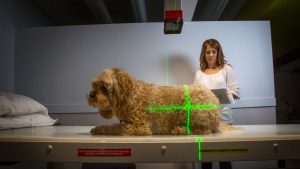

By Rebecca Robbins From Stat News AN FRANCISCO — When pet dogs are diagnosed with cancer, they typically get surgery, chemotherapy, or radiation — that is, of course, if their owner opts to treat it. Now, a Silicon Valley startup wants to offer precision medicine instead — by recommending targeted therapies that are normally used to treat humans. For a price tag in the...

The Power of Nutrition in Disease Prevention
From American Veterinarian By Kate Boatright, VMD It is undeniable that pet owners want their pets to live as long as possible. Veterinarians are great at providing preventive care services such as vaccinations and parasite prevention, but nutrition expert Donna Raditic, DVM, DACVN, feels we should be doing more. Dr. Raditic, who works wirh Nutrition and Integrative Medicine Consultants in Athens, Georgia, feels that...
Rethinking Osteoarthritis: Findings From the 2019 VET Report
From American Veterinarian Osteoarthritis (OA) and excess weight work synergistically to decrease the health and quality of life of dogs and cats, according to the 2019 Veterinary Emerging Topics (VET) Report from Banfield Pet Hospital released this week. Among patients diagnosed with OA in the hospital network in 2017, about 51% of dogs and 41% of cats were also diagnosed as overweight or obese....
10 Disease Warning Signs in Your Pet — Could They Point to a Tumor?
Written by Dr. Karen Shaw Becker From Healthy Pets Mercola Story at-a-glance More dogs and cats are being diagnosed with cancer today Signs of neoplasia in pets are also seen in many other disorders and require prompt veterinary attention Your pet’s immune system is capable of killing cancer cells; however, cancer cells can also mutate in ways that overwhelm the immune system’s ability to...
ACVP 2017: Test-driving CARs to Treat Canine Lymphoma
American Veterinarian Hope—in the form of chimeric antigen receptor T-cell therapy—is on the horizon for extended remission in dogs with hematologic B-cell malignancies. By Nicola M. Parry, BVSc, MRCVS, MSc, DACVP, ELS According to Nicola J. Mason, PhD, BVetMed, DACVIM, associate professor of medicine and pathobiology at the University of Pennsylvania School of Veterinary Medicine in Philadelphia, adoptive cell transfer (ACT) is an emerging...
Reduce Your Dog’s Cancer Risks
You can’t prevent cancer – at least not yet – but you can stack the odds in your dog’s favor. WDJ suggests four ways you can lessen the odds of cancer in your dog. From Whole Dog Journal By Cynthia Foley Veterinary oncologists say that cancers in humans and in dogs are incredibly similar, in terms of growth and prognosis. That’s good news for...
New Veterinary Oncology Therapeutics
By Chad M. Johannes, DVM, DACVIM (SAIM, Oncology) Cancer research is advancing at an unprecedented pace, bringing a host of new treatment possibilities. From American Veterinarian The diverse expanse of specialized veterinary oncology therapeutics both on the market and on the horizon makes it challenging to remain up-to-date on the latest advances and technologies, yet this information is vital to practices interested in providing...
The real science behind your pet’s food
Daily Sun news sources The Beatrice Daily Sun Pet owners will do just about anything they can to keep their furry friends happy and healthy, which is why the vast majority of pet owners say they’re concerned about the ingredients in their pet’s food. Based on a quality and safety Purina survey conducted in 2017, 84 percent of pet owners are concerned about the...
RadVet, world-first pet skin cancer treatment, being trialled in Hawkesbury
Sarah Falson Hawkesbury Gazette A WORLD-FIRST skin cancer treatment for pets is being trialled in the Hawkesbury, and radiation therapist Dr. Yolanda Surjan is appealing for referrals so she can take the treatment global. The therapy, called RadVet, uses radiation technology proven for use on humans, and applies it to skin cancers on horses, cats and dogs. Dr Surjan said it offered a safer,...