
“For me a house or an apartment becomes a home when you add one set of four legs, a happy tail, and that indescribable measure of love that we call a dog.” ― Roger Caras In This Issue: Make Your Dog a Star in Our 2020 “Cancer Can’t Keep a Good Dog Down” Calendar Contest; May is Lyme Disease Awareness Month; Clinical trial begins...
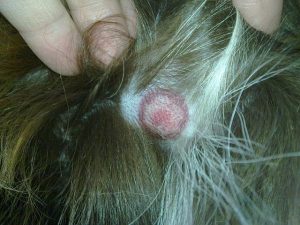
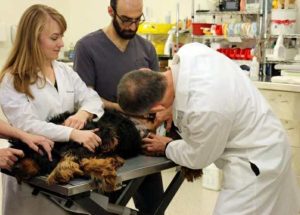
OSU study: Removing dogs’ tumors sharply cuts cancer recurrence
The relative risk of a recurrence of cancer is reduced by 60% in dogs whose tumors are completely removed, a new analysis by Oregon State University researchers has found. The researchers reviewed published veterinary studies and found a recurrence of less than 10% in dogs where the soft tissue sarcoma was completely excised, versus 33% recurrence in cases where the cancer was incompletely excised,...
May — Lyme Disease Awareness Month
Lyme disease in dogs is one of the most common tick-transmitted diseases in the world, but it only causes symptoms in 10 percent of affected dogs. When infection leads to Lyme disease in dogs, the dominant clinical feature is recurrent lameness due to inflammation of the joints, and a general feeling of malaise. There may also be depression and a lack of appetite. More serious complications...
Oral melanoma in dogs
By Dr. Karsten Fostvedt Melanoma is a tumor that arises cells that produce a pigment called melanin. Melanomas in the mouth of dogs are often extremely malignant and require early, aggressive surgery for a successful outcome. Oral melanoma is one of the most common malignant cancers in dogs. No direct cause of oral melanoma has been identified in dogs. Most dogs are older, and...
Cardiac nurse starts program to donate used pacemakers to dogs in need
Michelle Lou More than 20 years ago, Terri Mattula’s dog Gator passed out while her husband was walking him. They took Gator to the vet and learned he had a third-degree heart block and needed a pacemaker. However, they were both students at the time and couldn’t afford one. “That’s urgent arrhythmia,” Mattula said. “If a person had that kind of block, within 24...
Talking canine cancer awareness with UMN
Hemangiosarcoma is a highly invasive type of cancer that grows rapidly. It primarily forms in dogs, but can also develop in humans and other animals. Jaime Modiano with the University of Minnesota College of Veterinary Medicine and Masonic Cancer Center answers questions about what hemangiosarcoma is, the current standard of care, and the implications his cancer research has for veterinary and human medicine. Q:...
Just in time for Mother’s Day. Introducing your new baby to your family pup.
How to Introduce Your New Family Member to Your Pup By Sally Writes For many families across America, their first chance at ‘parenting’ was with their beloved puppy. But as you know, a baby changes everything, and that means that the new parents – and their pup – probably have a lot of adapting to do when a new baby enters the home....
Clinical trial begins to test universal vaccine against canine cancer
On Thursday, May 2, the very first dog received the very first vaccine intended to protect her from cancer. And soon after the 9-year-old Gordon setter named Trilly received her shot, so, too, did Norton, a 9-year-old rat terrier mix. “We’re testing a totally novel way of creating an anti-cancer immune response,” says David Vail, a professor and board-certified oncologist at the University of Wisconsin–Madison...
What’s Up With Time Magazine’s Pet Parent Rhetoric?
Disclaimer The Puppy Up Foundation does not endorse nor recommend any particular product, service, or treatment. We offer information strictly for educational and/or informational purposes. We believe it is the pet owner’s responsibility to do the research and draw his or her own conclusions. Article Written by Dr. Karen Shaw Becker Recently an article ran in Time magazine titled “Some Anti-Vaxxers Aren’t Getting Their...